Seeing in Depth: the Practice of Bilingual Writing
Article Sidebar
Published:
1993-01-01
Main Article Content
Abstract
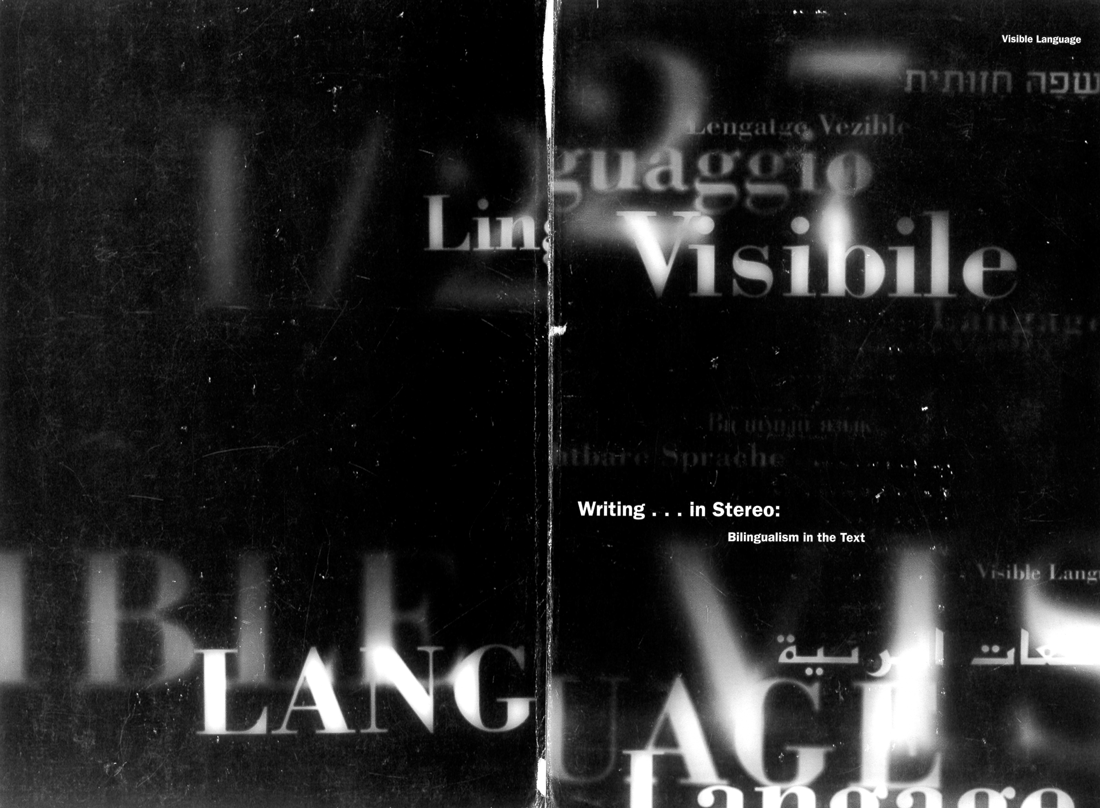
Producing and reading a bilingual text, much like creating and viewing a stereoscopic image, involve a much more complex process of perception and decoding than do the writing and deciphering of a monolingual one. Working with bilingual texts creates both special problems and unique opportunities for the writer, the graphic designer, the reader and for those of us who are fascinated by visible language in all its forms. Most studies on bilingualism tend to neglect the written manifestations of the phenomenon in favor of the psychological, social and pedagogical dimensions of the problem as they appear in the spoke language. This issue explores the practice of bilingual writing in a wide variety of texts, from cuneiform tablets and bilingual dictionaries to contemporary fiction and bilingual editions of texts. "Texts" can be anything from polyglot bibles to advertising slogans and brand names. The main objective of this issue devoted to writing "in stereo" is to bring together specialists in a wide range of fields, from graphic design and lexicography to text-linguistics and literary theory, to study the practice of bilingual writing at the level of the word (company logos and bilingual dictionaries), the sentence (code-switching) and the entire text. The examples chosen involve both visible and invisible bilingualism (depending on the reader/viewer’s knowledge of the languages in question).
Article Details
Section
Research Article