Constructing the Hypertangible Novel: Writing and Design as Process
Article Sidebar
Main Article Content
Abstract
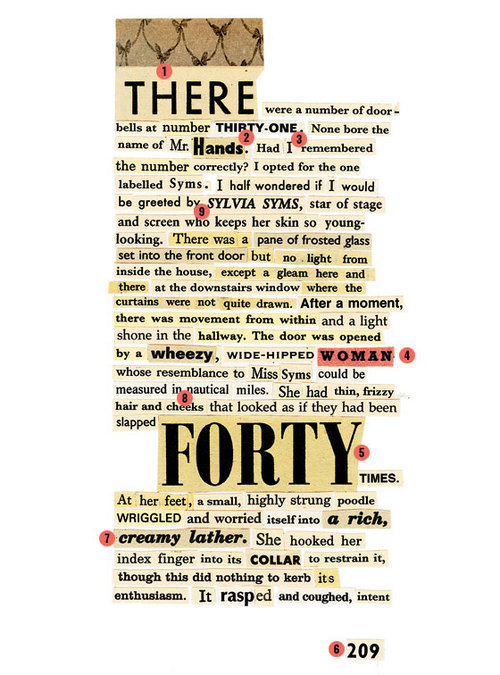
As the printed book co-exists with the influence of the digital, narratives become hybrid and are transformed into documents in which the content can very easily flow from one form to another. As a result of this, the first decades of the 21st century have seen the emergence of publications that challenge traditionally orthodox reading practices. This article examines the response to the digital development in novels that foreground the material dimension of the narrative and are print-specific. These works do not reject the digital realm but absorb its characteristics and expand the possibilities offered by the material dimension of the book. By analyzing Graham Rawle’s Woman’s World and its process of creation through the collage and cut-up techniques, this article aims to show how design can contribute to foreground the physical dimension of literature in novels with hypertangible qualities. This examination draws attention to design being embedded in the writing process that constructs both material and narrative dimensions. Findings show that these novels can be a product of a ‘designwriting’ process, in which design serves both as a tool to shape a narrative, and as a process that expands it and creates an object that offers an embodied reading experience. Ultimately, this highlights the importance of physical reading in the age of digital media.